
Okaloosa Previous Residents by Era
An address history needs a source that fits the date. The current parcel card is the best starting point because its sales table can supply an instrument or book-and-page citation. The deed chain then carries the search through the modern and scanned county indexes. Household sources answer a different question. A telephone listing, released census schedule, obituary, or permit may show a person tied to the place without making that person the owner.
| Local source | Documented span | Keeper | Evidence found |
|---|---|---|---|
| Historical official-record indexes | 1915 to July 1982 | Okaloosa County Clerk | Direct or indirect party path and deed book/page |
| Modern official-record index | August 1982 era onward | LandmarkWeb | Parties, instruments, dates, and some images |
| Parcel roll and sales history | Current roll; earlier sales vary | Property Appraiser | Owner, situs, mailing address, legal description, deed citation |
| Federal census | Released schedules through 1950 | NARA and library databases | Residents, family ties, ages, and occupations |
| Telephone and city directories | Title-specific twentieth-century runs | OCPLC, Library of Congress, Walton Heritage | Listed subscriber or occupant at a dated address |
| Early tax rolls and wills | Tax rolls 1915 to 1943; wills 1915 to 1926 | State Archives of Florida | Taxpayer, land, value, estate, and heir evidence |
Start with ownership records for a parcel that still exists. Start with a directory or census when the question is about a past household. Neither path should stand alone. The most reliable account of previous residents joins the parcel's stable legal identity to a source made near the date being studied.
Start Okaloosa Address History Today
The Okaloosa County Property Appraiser search accepts owner name, location address, parcel number, and legal information. Copy the parcel ID, physical or situs address, legal description, owner, and latest sale citation. Situs means the assigned location of the taxable land. The mailing address is only where notices go, so it may point to another home, a business office, or an out-of-area owner.
The parcel card can also show assessed values, exemptions, building facts, a sketch, photos, and past sales where available. A homestead exemption is useful evidence of an owner's permanent-residence claim on the qualifying date. It is not a list of everyone who lived there. Coastal condominiums and seasonal property make that warning especially important in Destin and south Okaloosa County.
Reverse Okaloosa County Deed Transfers
A chain of title is the linked series of recorded transfers for the same land. Okaloosa County has no separate recorder. The Clerk of Circuit Court and Comptroller records deeds and runs LandmarkWeb Official Records Search. Search by party after obtaining the current deed citation from the parcel card. Modern street addresses are not a dependable deed-index key.
- Open the current parcel card and copy its parcel ID, legal description, owner, and newest sale instrument.
- Retrieve that purchase deed in LandmarkWeb. Match its legal description to the parcel before accepting the result.
- Note the seller, who is the grantor on that transfer. Search that seller as a grantee before the sale date to find the prior purchase.
- Repeat until the trail reaches the August 1982 boundary, recording each date, party role, instrument number, and book/page.
- For earlier transfers, browse the indirect historical index backward and the direct side forward. Carry each book/page citation to the deed image or Clerk counter.
- Grantor
- The person or entity conveying an interest in land.
- Grantee
- The person or entity receiving that interest.
- Legal description
- The lot, block, subdivision, or section-township-range wording that identifies land despite address changes.
- Chain of title
- The ordered sequence of transfers affecting one parcel.
Cross Okaloosa's 1982 Index Line
The Clerk's Historical Index Browser exposes scans rather than a modern name database. Its direct books index grantors, and its indirect books index grantees. Modes separate individuals from corporations and firms. Later volumes even give banks their own category. Runs cover broad periods from 1915 through 1973, annual books for 1974 through 1980, a combined 1981 volume, and split 1982 periods.
Browse alphabetically, read the handwritten or typed index line, and save the book/page citation. The citation is the bridge to the actual deed. Names may appear under initials, variant spellings, or an entity. A recorded index line narrows the search, but only the instrument confirms the land and transfer terms.
Previous Residents Before Okaloosa Existed
Okaloosa County was created in 1915 from parts of Santa Rosa and Walton counties. That date explains why the local historical browser begins when it does. A deed, probate matter, marriage, or census entry from an earlier year did not vanish. It remained with the predecessor jurisdiction that covered the land when the event occurred.
Use the legal description, old precinct or place name, and event date to choose between predecessor books. Milligan served as the temporary county seat before a 1917 election selected Crestview as the permanent seat. That history makes geography part of every early search for past residents. Searching only the current county name can miss the first chapter of a property's trail.
Okaloosa Previous Residents Beyond Owners
Deeds prove title, while directories and census schedules can identify listed occupants. The Library of Congress holds a digitized Crestview-area telephone reel covering 1957 through May 1963, including Fort Walton Beach pages. It shows names or initials, street or route addresses, and phone numbers. It is a telephone directory, so do not assume it lists occupations, spouses, or ownership marks.
Other verified holdings are scattered. Walton County Heritage lists a Niceville and Valparaiso directory for 1991, a Crestview volume for 1992, Fort Walton Beach directories from 2000 through 2009, and a 2018 volume. The Okaloosa County Public Library Cooperative catalog spans six branches, but a branch call is wise for uncataloged vertical files, old phone books, yearbooks, newspaper microfilm, and obituary clippings. The full collection context belongs on the Okaloosa County city directory page.
- Fix the exact address and spelling in one dated directory.
- Check nearby alphabetical entries and the street section, if present, for relatives or adjacent households.
- Repeat in the prior and next available editions. Treat a one-year gap as weak evidence because military turnover and canvass omissions were common.
- Pair a 1940 or 1950 directory find with the released federal census schedule.
- Use deeds for ownership, then probate and obituaries when a person disappears from later editions.
Date an Okaloosa House Itself
People and structures follow different timelines. The parcel card may list a year built, while a building permit can date later work and name an owner, applicant, or contractor. Permit custody depends on jurisdiction. Nine municipalities handle many permits inside their limits, while county building services cover unincorporated land. A postal line such as Crestview or Fort Walton Beach does not settle which office holds the file.
Sanborn fire-insurance maps can show a building footprint, material, use, and street-number context for covered towns and years. Coverage is town-specific, not countywide. Search the Library of Congress or University of Florida collections under Crestview, Camp Walton, Fort Walton, and Fort Walton Beach. A historic map should be matched to a plat or legal description before treating an old number as today's parcel.
Close Okaloosa Resident Trails Carefully
Probate and obituaries often explain why a person leaves a deed chain or directory. ClerkQuest can identify a probate case from about 1990 onward, while older or non-viewable files may need a counter or written request. State Archives wills cover Okaloosa County from 1915 through 1926 on one microfilm reel. Funeral records, cemetery volumes, local papers, and probate deeds can connect a former household to heirs without guessing from a shared surname.
Federal and state court systems are separate from county land records. The PACER federal court service explains the federal channel when a historical lead belongs there.
The service is a possible endpoint for a federal case, not a substitute for the Okaloosa Clerk's deed, probate, or county court files.
The Florida Courts access standards describe statewide rules for public court records.
Those standards help explain why a docket or image may be limited even when a name appears elsewhere in the address trail.
Vital Clues for Past Residents
Birth certificates can anchor identity, but Florida does not offer them as an open address directory. Certificates less than 125 years old are confidential under section 382.025, Florida Statutes, and access normally requires the adult registrant, a named parent or guardian, a legal representative, or court authority. The state and the Florida Department of Health in Okaloosa County provide official ordering channels.
The Florida birth certificate access page sets out the application and eligibility path.
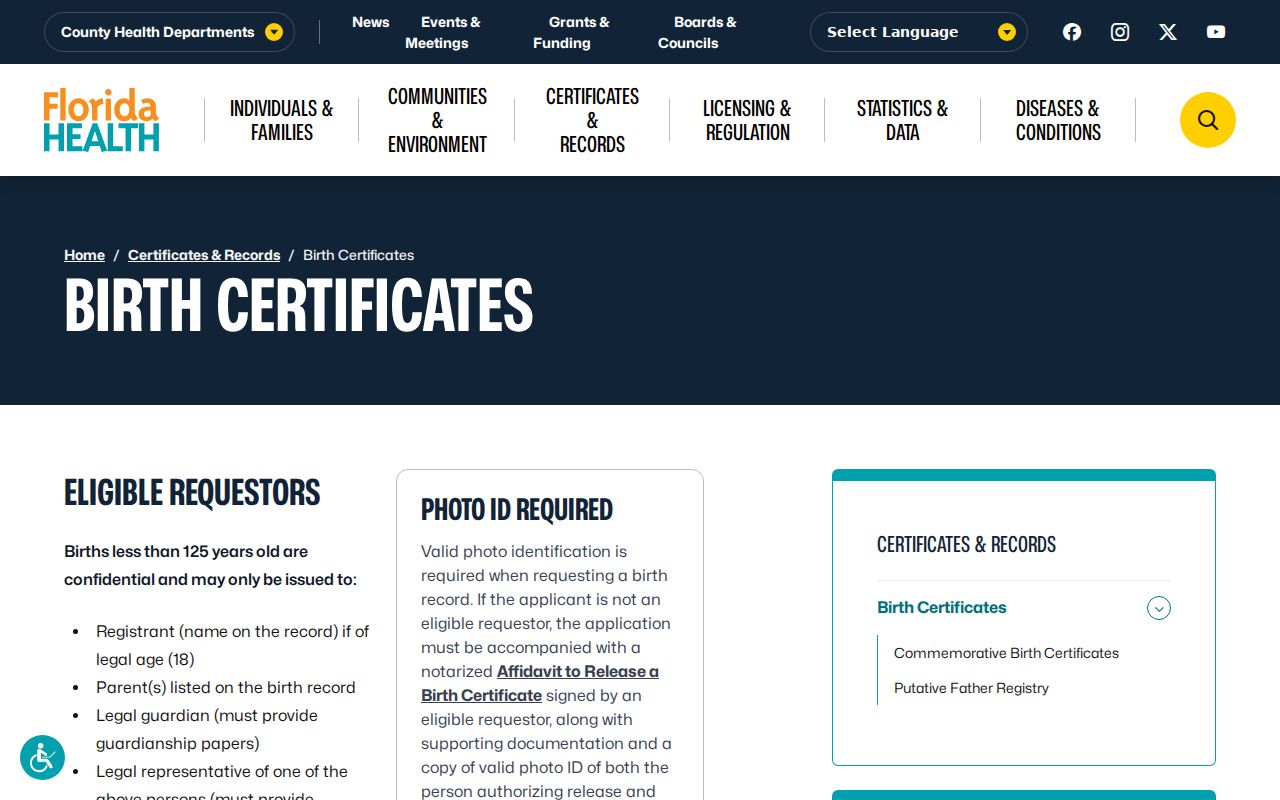
Use a certificate only for the event facts it states. It does not by itself prove that a person occupied the researched property.
Use Okaloosa Previous Residents Lawfully
Address-history work can support genealogy, estate research, preservation, and personal curiosity. Some public sources hide protected details. Florida's Address Confidentiality Program supplies a substitute address for qualifying survivors, and other statutory exemptions can suppress owner information while parcel geometry, address, map, and values remain visible.
A missing name is not proof that nobody owned or occupied the land. It may reflect a confidential record, a directory omission, an unindexed image, a military move, or the difference between ownership and occupancy.
Lawful use. Research previous residents for a legitimate personal purpose. Never use an address trail to watch, threaten, harass, or evade a protected person's privacy.